
Introduction
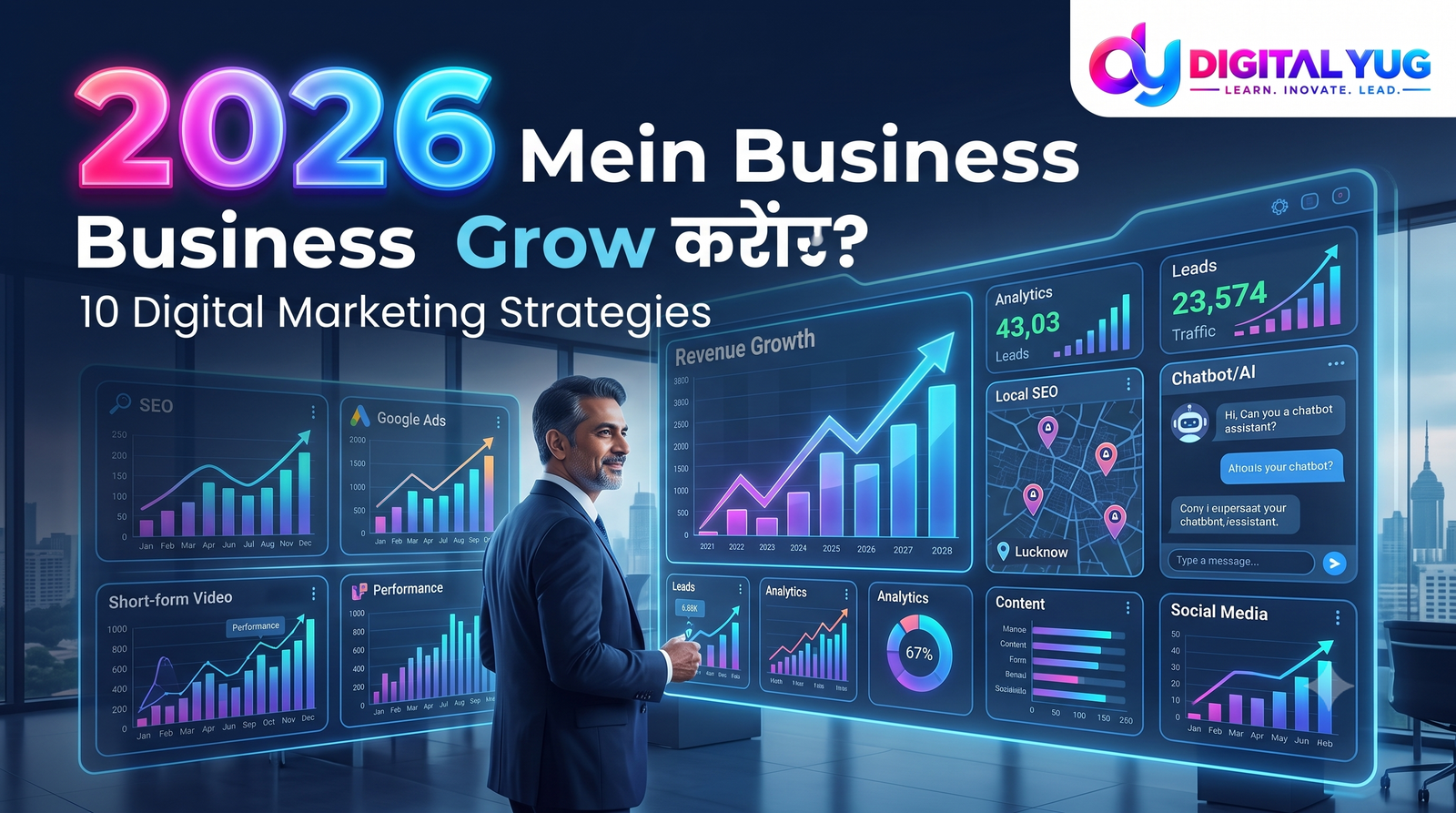
The digital marketing landscape never stands still. What worked brilliantly in 2024 might feel outdated by the time 2026 rolls around. Algorithms evolve. Consumer behaviors shift. New technologies emerge and reshape how people discover, interact with, and buy from brands.
If you want your business to thrive in 2026, you can’t afford to rely on yesterday’s playbook. You need a strategy that’s forward-looking, adaptable, and grounded in what actually drives results.
Whether you’re a small business owner in Lucknow searching for a digital marketing agency in Lucknow or an established brand exploring new growth channels, these 10 strategies will help you stay ahead of the curve.
1. Embrace AI-Powered Personalization
Generic marketing messages are losing their effectiveness. In 2026, customers expect brands to understand their preferences, anticipate their needs, and deliver relevant experiences at every touchpoint.
AI tools now make it possible to personalize email campaigns, website content, product recommendations, and even ad creative at scale. By analyzing user behavior and purchase history, you can deliver the right message to the right person at the right time.
Practical tip: Start with email personalization — use your customer’s name, recommend products based on past purchases, and send behavior-triggered emails (like abandoned cart reminders).
2. Prioritize Short-Form Video Content
Short-form video isn’t just a trend — it’s become the dominant content format across platforms like Instagram Reels, YouTube Shorts, and TikTok. In 2026, brands that master short-form video will capture attention, build emotional connections, and drive engagement more effectively than those relying solely on static content.
What works: Behind-the-scenes clips, quick tips, product demonstrations, customer testimonials, and educational content delivered in 15–60 seconds.
Practical tip: Repurpose your long-form content (blogs, podcasts, webinars) into bite-sized video clips. One blog post can generate 5–10 short videos.
3. Build a Strong Local SEO Presence
For businesses serving specific geographic areas, local SEO is non-negotiable. In 2026, the “near me” search phenomenon is stronger than ever. People search for products and services nearby, and they expect immediate, relevant results.
Key actions:
- Optimize your Google Business Profile with accurate information, photos, and regular updates
- Collect and respond to customer reviews — they influence local rankings and trust
- Use local keywords naturally (like “best digital marketing agency in Lucknow”)
- Build local backlinks from community websites, directories, and news outlets
4. Leverage Influencer and Creator Partnerships
Influencer marketing has matured beyond celebrity endorsements. Today, micro-influencers and niche content creators offer some of the highest engagement rates and trust levels.
In 2026, smart brands are moving away from one-off sponsored posts and building long-term partnerships with creators who genuinely align with their values. Authenticity matters more than follower count.
Practical tip: Look for creators whose audience overlaps with your target customer. Start with a small collaboration (like a product review or giveaway) and measure engagement before committing to larger campaigns.
5. Implement Conversational Marketing with Chatbots
Customers want answers fast. Waiting hours or days for an email response is no longer acceptable. Conversational marketing — using chatbots, live chat, and messaging apps — allows you to engage visitors in real-time, answer questions, and guide them toward a purchase.
In 2026, AI-powered chatbots are smarter than ever. They can handle complex queries, qualify leads, and even schedule appointments without human intervention.
Practical tip: Add a chatbot to your website that greets visitors, asks what they’re looking for, and directs them to the right resources or team members.
6. Focus on Customer Retention and Loyalty
Acquiring a new customer costs significantly more than retaining an existing one. Yet many businesses pour most of their marketing budget into acquisition while neglecting retention.
In 2026, successful brands are building loyalty programs, sending personalized offers, and creating community spaces where customers feel valued and connected.
Practical tip: Implement a simple loyalty program that rewards repeat purchases, referrals, and social engagement. Even a small discount or exclusive access can make customers feel appreciated.
7. Optimize for Voice and Visual Search
Voice search (via smart speakers and mobile assistants) and visual search (using images to find products) are growing rapidly. By 2026, a significant portion of searches will be voice-based or image-based, especially among younger demographics.
To prepare:
- Optimize for natural language queries and conversational keywords (e.g., “where can I find organic coffee near me?”)
- Use high-quality images with descriptive alt text
- Implement structured data (schema markup) to help search engines understand your content
8. Use Data Analytics for Smarter Decision-Making
Gut feelings and guesswork have no place in modern marketing. In 2026, data is your competitive advantage. By tracking and analyzing customer behavior, campaign performance, and market trends, you can make informed decisions that improve ROI.
Practical tip: Set up proper tracking (Google Analytics 4, conversion tracking, UTM parameters) and review your metrics weekly or monthly. Look beyond vanity metrics — focus on leads, conversions, and customer lifetime value.
9. Invest in High-Quality, Long-Form Content
While short-form video grabs attention, long-form content builds authority. In-depth blog posts, whitepapers, case studies, and comprehensive guides signal expertise to both search engines and potential customers.
In 2026, Google continues to reward helpful, people-first content that answers user questions thoroughly and accurately.
Practical tip: Create pillar content — a comprehensive guide on a core topic — and then break it down into smaller pieces (blog posts, videos, social posts) that link back to the main pillar.
10. Experiment with Interactive Content
Interactive content — quizzes, polls, calculators, assessments, and interactive infographics — drives higher engagement and longer time-on-site compared to static content. It also provides valuable data about your audience’s preferences and pain points.
Practical tip: Create a quiz related to your industry. For example, if you’re a digital marketing agency, create a “What’s Your Digital Marketing Score?” quiz that collects user information while providing value.
Why Businesses Need Professional Digital Marketing Support
Implementing these strategies requires time, expertise, and consistency. Running a business is demanding enough without trying to master SEO, content creation, paid ads, analytics, and video production simultaneously.
That’s where a professional agency comes in. A dedicated partner can:
- Develop a customized strategy aligned with your goals
- Execute campaigns across multiple channels
- Track performance and optimize continuously
- Stay current with industry trends and algorithm changes
If you’re looking for a digital marketing company in Lucknow that understands both the local market and the global landscape, Digital Yug offers the expertise and commitment needed to drive real growth.
FAQ: Digital Marketing Strategies for 2026
1. Which digital marketing strategy is most effective in 2026?
There’s no single “best” strategy — effectiveness depends on your industry, audience, and goals. However, a combination of AI-powered personalization, short-form video, and local SEO tends to deliver strong results across most businesses.
2. How much should I invest in digital marketing in 2026?
A common benchmark is 7–10% of your revenue for marketing, with a growing share allocated to digital channels. However, startups or businesses in growth phases may invest more. The key is to track ROI and adjust accordingly.
3. Is SEO still relevant in 2026?
Absolutely. SEO remains one of the most cost-effective ways to attract targeted, high-intent traffic. While algorithms evolve, the fundamentals — quality content, good user experience, and relevant keywords — continue to matter.
4. How can small businesses compete with larger brands?
Small businesses can leverage local SEO, personalized customer service, community engagement, and niche content to build loyal audiences. Agility and authenticity are your advantages over larger, slower competitors.
Conclusion
The digital marketing strategies that will define 2026 are already taking shape. From AI personalization to short-form video, local SEO to interactive content, the opportunities are vast. The businesses that succeed will be those that embrace change, experiment boldly, and stay focused on delivering genuine value to their customers.
Ready to grow your business with a future-ready digital strategy? Connect with Digital Yug — your trusted partner in digital marketing success.
Digital Yug — helping businesses in Lucknow and beyond grow with smart, results-driven digital marketing.